
Sounder (1972)
A movie where a bad thing happens to a dog.
Black sharecropper Nathan (Paul Winfield), his son David Lee (Kevin Hooks), and their trusty dog Sounder go on a raccoon hunt to put food on the table. When they come home empty-handed, Nathan steals a ham to feed the family. Since stealing is illegal, Nathan is arrested.
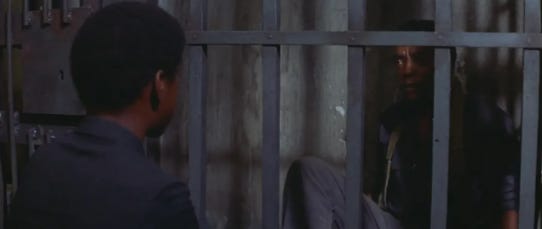
As the police are taking Nathan away, an evil white deputy shoots doggo Sounder in the face. Unfortunately, the film doesn’t then morph into John Wick (2014). Instead, Nathan is sent to a prison labor camp, leaving his wife Rebecca (Cicely Tyson) and the kids to do all the sharecropping without him. As David Lee later puts it:
Some people came and took my daddy away and other people said we couldn’t work the farm. But we had to, ‘cause we didn’t wanna lose our farm. We planted the crops and they grew.
Sounder survives the shooting and he and David Lee set off on a quixotic journey to visit Nathan at the labor camp. He doesn’t find his father but does meet a kindly Black schoolteacher who invites him to live with her to attend school. David Lee is torn: he wants the education but believes the family needs him in the fields. That’s when Nathan returns home and gives his son his blessing to seize the opportunity and leave home.
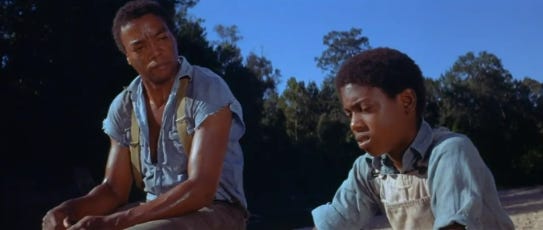
Rating: 4/10, I especially didn’t like when the dog was shot in the face.
Cast and Crew
Despite the Best Actor nomination, Paul Winfield might not be a name you know. His name hasn’t been uttered on “Jeopardy!” and doesn’t show up in the Quiz Bowl database. One reason for this, as posited by the Washington Post in 1991, was “the [film] industry’s fickle interest in Black actors and stories.”1
Winfield reunited with Sounder director Martin Ritt for Conrack (1974), based on the Pat Conroy memoir “The Water Is Wide.” It starred Jon Voight as a white teacher sent to an isolated South Carolina island and is a classic in the “white savior” genre.
Though Winfield slid down the call sheet, he kept working. He had roles in the Burt Lancaster thriller Twilight’s Last Gleaming (1977), legendary bomb Damnation Alley (1977), IP sequel Star Trek II: The Wrath of Khan (1982), franchise starter The Terminator (1984), and Scott Turow adaptation Presumed Innocent (1990).
Cicely Tyson2 is famed for refusing roles that demeaned Black people. Her part in Sounder is emblematic of the roles she did take: she plays an unambiguously good Black woman who nobly overcomes hardship. As Tyson described it:
The story in Sounder is a part of our history, a testimony to the strength of humankind […] Our whole Black heritage is that of struggle, pride and dignity. The Black woman has never been shown on the screen this way before.
So, while I didn’t find her character to be interesting (she has no journey, no growth, no change), there’s no denying that Tyson was a capital-I icon. Beyond her screen roles, she also embodied the Black Is Beautiful movement, which is discussed in this CNN article about her beauty legacy.
Some of Tyson’s most notable works were in TV specials and miniseries. Here are a few of her on-screen works to know.
The TV movie “The Autobiography of Miss Jane Pittman” (1974), where she played a former slave reaching her 110th birthday and seeing the rise of the civil rights movement.
She played Kunta Kinte’s mother in “Roots” (1977), the miniseries adapted from Alex Haley’s novel.
She won a Best Supporting Actress Emmy for her role in the miniseries “Oldest Living Confederate Widow Tells All” (1994) (spoiler: she didn’t play the old Confederate widow).
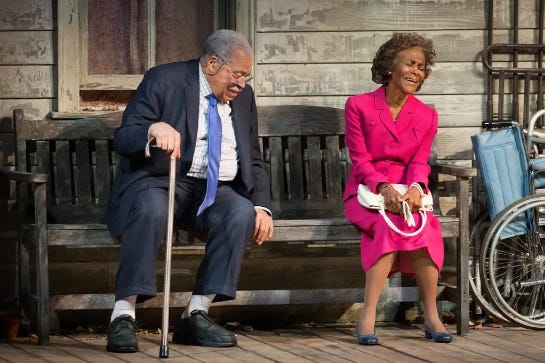
In the later decades of her career, Tyson often appeared as a matriarchal figure in projects like Fried Green Tomatoes (1991), The Help (2011), “How to Get Away with Murder” (2014–2020) and much of Tyler Perry’s oeuvre.3 Meanwhile, she became the oldest person to win a Tony for her role in Horton Foote’s “The Trip to Bountiful.”
The Trivia
“Sounder” is a young adult novel written by William H. Armstrong that won the Newbery Medal in 1970. Since I don’t have anything left to say about “Sounder,” let’s instead talk about the Newbery Medal.
First: what is the Newbery Medal4? Let’s let the folks who give it out explain:
The Newbery Medal was named for eighteenth-century British bookseller John Newbery. It is awarded annually by the Association for Library Service to Children, a division of the American Library Association, to the author of the most distinguished contribution to American literature for children.
Ah, “literature for children.” This helps us distinguish it from the (Randolph) Caldecott Medal, also awarded by the ALA but to (per their website) “the artist of the most distinguished American picture book for children.” The Caldecott is for picture books5 while the Newbery is for books for grade-schoolers. The Newbery is also a bit older: it was first awarded in 1922, while the Caldecott was first given out in 1938.
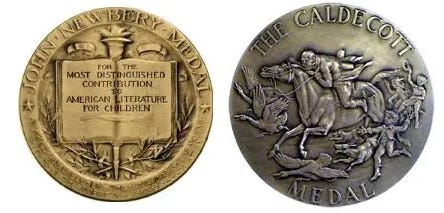
Note that there are also Newbery Honors, given to runners-up for the Newbery Medal. That’s nicer than calling everyone who didn’t win a giant loser and telling them to get lost, I guess. Maybe it wasn’t so nice for Laura Ingalls Wilder, though: she won five Honors without ever winning a Medal. I mean, you think she’d take the hint, but no, she kept cranking out those “Little House on the Prairie” books and the ALA kept not giving her a Medal.
Enough talk about what a loser Laura Ingalls Wilder was. Let’s talk about winners: specifically, the set of people who have won multiple Newbery Medals.6 Our first author is Katherine Paterson who won Medals for “Bridge to Terabithia” and “Jacob Have I Loved” (and also scored an Honor for “The Great Gilly Hopkins”).
“Bridge to Terabithia” (1977): Jess and his new friend Leslie invent an imaginary kingdom in the woods across a creek. Leslie drowns in the creek and Jess later builds a bridge across it, probably as a symbol or whatever. The book gets banned a lot even though banning books is for chumps.
“Jacob Have I Loved” (1980): A girl is jealous of her hot and talented sister but learns to not be. Its title comes from Romans: “Jacob have I loved, but Esau have I hated.”
“The Great Gilly Hopkins” (1978): Galadriel “Gilly” Hopkins is a rumbustious foster child who learns to love her new family or whatever, all children’s books are the same.7
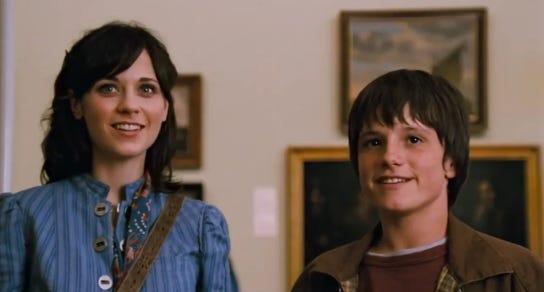
Okay, on to E. L. Kaliningrad Konigsburg. In 1968, she won both an Honor and a Medal—the Honor being for “Jennifer, Hecate, Macbeth, William McKinley, and Me, Elizabeth” and the Medal for “From the Mixed-Up Files of Mrs. Basil E. Frankweiler.” She’s the only person ever to do that. Also, girl, what are those titles. Her second Medal came almost 30 years later for “The View from Saturday,” about an Academic Bowl team.
You actually should know the title “From the Mixed-Up Files of Mrs. Basil E. Frankweiler.” Here’s the plot: two kids run away from home to live in the Metropolitan Museum of Art (which we discussed in this post). There’s a statue there that might be a Michelangelo and the kids have to figure out if it is from the statue’s former owner, Mrs. Basil E. Frankweiler.
Lois Lowry is our next two-time winner.
“Number the Stars” (1989) is about a 10-year-old Danish girl helping her Jewish friend escape Nazi-occupied Copenhagen.8
“The Giver” (1993) is one of the first YA dystopian novels. It centers on a society that eliminated feelings, memories, and colors, but needs one kid to bear all that icky stuff for the whole community.9
Last author to know: Kate DiCamillo. I’ve been asked trivia questions about many of her works, including both of her Medal winners. Her first, “The Tale of Despereaux” (2003), is about a mouse trying to save a human princess, and her second, “Flora & Ulysses” (2013), is about a girl who processes her parents’ divorce with the help of a superpowered squirrel. DiCamillo also got an Honor for “Because of Winn-Dixie” (2000), about a girl and her supermarket-named dog. That was turned into a movie in 2005 with—oh, hey, Cicely Tyson! It’s all connected!
And while I’ve never encountered her name in the wild, you’ll be ahead of the curve if you remember Erin Entrada Kelly, the newest member of the two-time Newbery Medal club. She won for “Hello, Universe” (2017) and “The First State of Being” (2024).
Odds and Ends
Sounder was produced by Radnitz / Mattel, making it a distant ancestor of Barbie (2023)…this was the first film to feature Oscar-nominated performances by two Black actors…Crispus Attucks, killed in the Boston Massacre, is considered the first casualty of the American Revolution…Paul Winfield voiced “Simpsons” character Lucius Sweet, a parody of Don King…Paul Winfield and Cicely Tyson reunited in the TV miniseries “King” and the film A Hero Ain’t Nothin’ but a Sandwich (1977)…Winfield played Jim in Huckleberry Finn (1974), a musical version of the Twain novel…AnnaSophia Robb starred in both Because of Winn-Dixie (2005) and Bridge to Terabithia (2007)…Sounder had a 1976 sequel called, Part 2, Sounder, which isn’t how we usually title sequels…Cicely Tyson was notably married to jazz trumpeter Miles Davis.
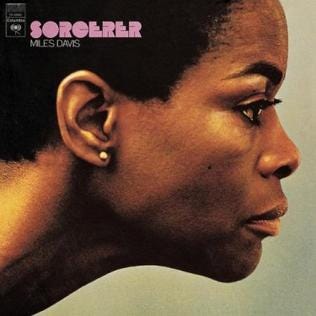
Though he did star in a pair of Blaxploitation films: Trouble Man (1972, from the guy who wrote Shaft), and Gordon’s War (1973).
This is the final time we’ll see her in this column. We previously saw her in The Heart Is a Lonely Hunter and, apparently, in an uncredited role in The Last Angry Man.
She was also in the 2017 Richard Linklater film Last Flag Flying, which is considered an unofficial sequel to The Last Detail (1973), which we’ll be watching.
Formally, the John Newbery Medal, but it’d be weird if you just casually called it that.
Though this can be complicated. 2008’s Caldecott winner, “The Invention of Hugo Cabret” by Brian Selznick (which the 2011 film Hugo was based on), is closer to a novel than a children’s picture book.
Except not really, since we’re gonna skip the first two people who won two Newbery Medals: Joseph Krumgold, who wrote “…And Now Miguel” and “Onion John,” and Elizabeth George Speare, who wrote “The Witch of Blackbird Pond” and “The Bronze Bow.” They’re winners, but like, loser winners because history doesn’t remember them.
It’s weird to write about children’s books because I don’t find their lessons particularly insightful. Like, yeah, you should love your family and be happy in your own skin, duh.
Fine, not every kid’s book has the theme “love your family and be happy in your own skin.” Some are about how Nazis are bad.
“The Giver” was turned into a film in 2014, with a cast including Jeff Bridges, Meryl Streep, and Taylor Swift. The book was also apparently part of a quartet (with “Gathering Blue,” “Messenger,” and “Son”) but no one on Reddit seems to like any of the sequels.